




Advertisement
Advertisement
People are just now becoming aware of the harm the colonialist term ‘Middle East’ can inflict, following the resurfacing of a viral video featuring a late Egyptian activist online.
Nawal El Saadawi, often described online as a ‘feminist firebrand’, was a distinguished Egyptian author, human rights advocate, and physician who lived from 1931 to 2021.
Renowned for challenging societal norms, El Saadawi frequently delivered talks, addressed challenging topics, and engaged in well-informed debates with her adversaries.
In 2015, this iconic figure conducted a masterclass on decolonization during the De Balie program in Amsterdam, the Netherlands.
Advert
It was during this event that she refused to continue a conversation unless her host ceased using the term ‘Middle East.’
“Not Middle East, please,” she asserted during The Freedom Lecture.
“The moment I hear ‘Middle East’, I become upset.
Advert
“This is colonial language. It’s like ‘third world’. Middle East? Middle to whom?”
After viewing the brief clip, Instagram users have flooded the comments, pledging to avoid using the term ‘Middle East’ in the future.
“I’m disappointed in myself for not even realizing or questioning this,” one person admitted.
Another person commented: “Wow, I wasn’t even aware. Learned something new and will stop using that term.”
Advert
Another user wrote: “I have never heard this before, and I’m glad I know now.”
“Middle to whom? Brilliant perspective,” echoed another.
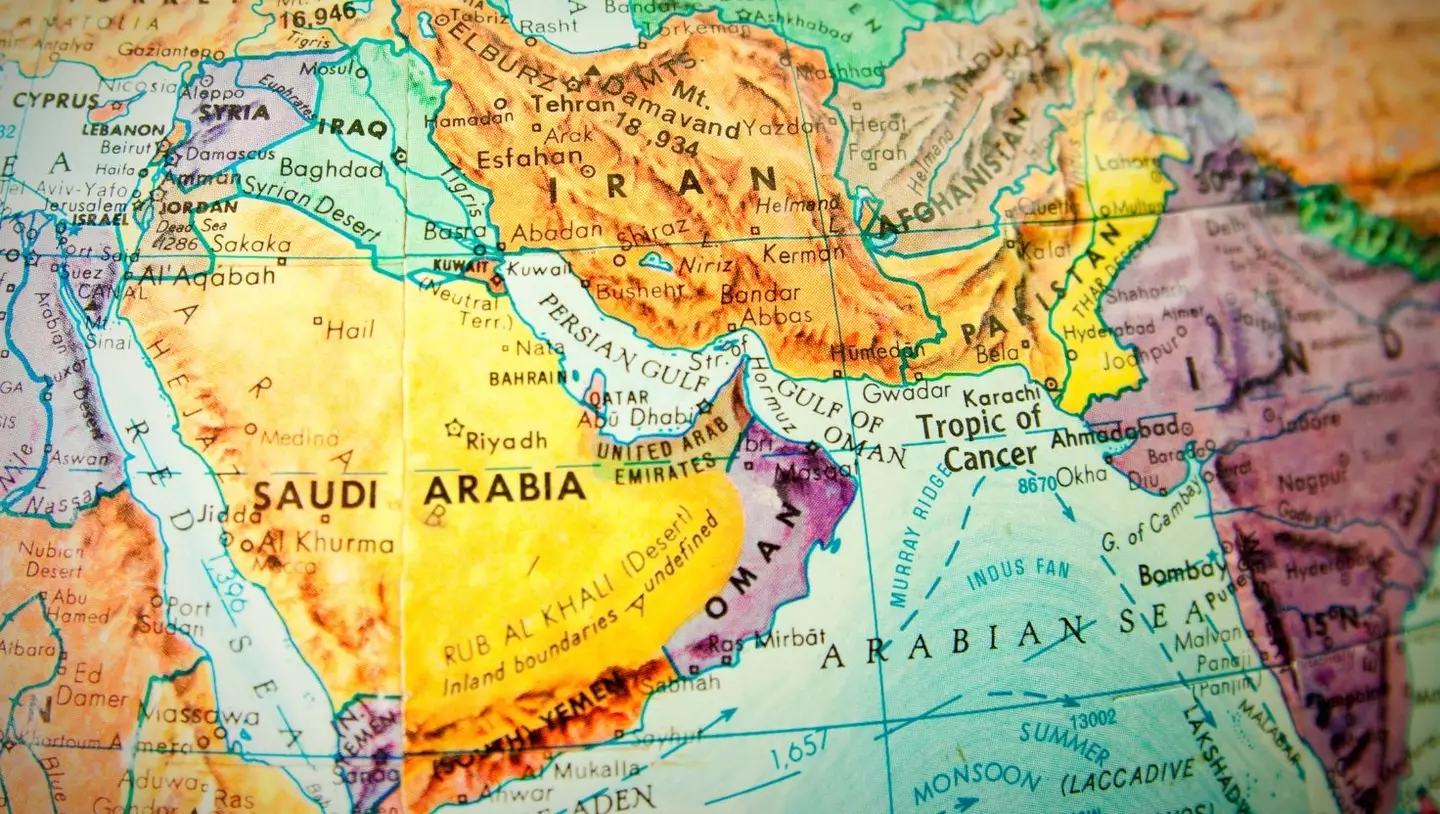
But what exactly is referred to as the so-called Middle East, and which countries are considered part of this region?
Why do we refer to the Middle East as the Middle East?
Advert
In the 19th century, Britain and other Western European nations categorized Asia and North Africa into three broad regions: the Near East, the Middle East, and the Far East.
Over time, the terms ‘Near East’ and ‘Far East’ have fallen out of favor, while ‘Middle East’—a term sustained by colonial powers—has remained in common use.
Therefore, when British people and some European territories use the term ‘Middle East’, they generally refer to countries located in Southwestern Asia and North Africa.
Which countries are considered part of the Middle East?
The geographical region known as the ‘Middle East’ lacks a standardized definition.
Advert
Despite the absence of a definitive list of Middle Eastern countries, most news outlets still identify a ‘core group’ of territories they define as part of the fabled area, according to World Population Review.
For instance, the BBC classifies Iran, Iraq, Syria, Egypt, Algeria, Bahrain, Israel, Palestine, Jordan, and Kuwait as Middle Eastern countries.
Lebanon, Libya, Morocco, Oman, Qatar, Saudi Arabia, Sudan, Tunisia, the United Arab Emirates, and Yemen are also categorized by the cooperation as part of the so-called ‘Middle East.’
However, some other publications include Cyprus and Turkey in this group as well.
Why do some find the term 'Middle East' problematic?
According to Lux Magazine, the term ‘Middle East’ is as outdated in the 2020s as it is rooted in colonialism.
The outlet wrote: “It’s time to abandon the cliché and the terminology that perpetuates it.”
Meanwhile, Julian Sayarer wrote for Geographical that the term Middle East has become so entrenched in our language that we ‘seldom consider what it means.’
He noted that if you’re in India, Palestine is geographically west, while the equator is 4,000 kilometers south of Beirut—questioning why the country is considered part of the ‘Middle East’ at all.
“The term ‘Middle East’ is imbued with old and colonial ideas of linen-shirted Brits on camelback or, more recently, grainy footage of embassy sieges or protests at US aggression in the region (relatedly, few other places are simply referred to as ‘the region’),” Sayarer continued.
He added: “Among Western populations, there’s a growing awareness that things in countries the term purported to describe aren’t as they had been led to believe.
“If we’re to avoid a century of increasing international irrelevance and complicity in ongoing violence, Western governments must urgently begin to catch up.”

Advertisement
Advertisement
Advertisement


